Introduction to Laser Dentistry
Laser dentistry is a modern way to treat many dental problems. Dentists use focused light beams, called lasers, to work on teeth and gums. Because of its gentle approach, laser dentistry is becoming more popular. Many people choose laser dental treatment for comfort and faster healing. According to the American Dental Association, lasers are safe when used by trained professionals.
Common Dental Procedures Using Lasers
Lasers help dentists perform many treatments. For example, they can:
Because lasers are precise, dentists can target only the problem area. This means less damage to healthy tissue.
Benefits of Laser Dentistry
Laser dentistry offers many advantages. First, many people feel less pain during and after treatment. Also, lasers can reduce bleeding and swelling. In addition, healing is often faster than with traditional methods. Some other laser dentistry benefits include:
Because of these benefits, more patients are asking about laser dental treatment.
How Laser Dentistry Works
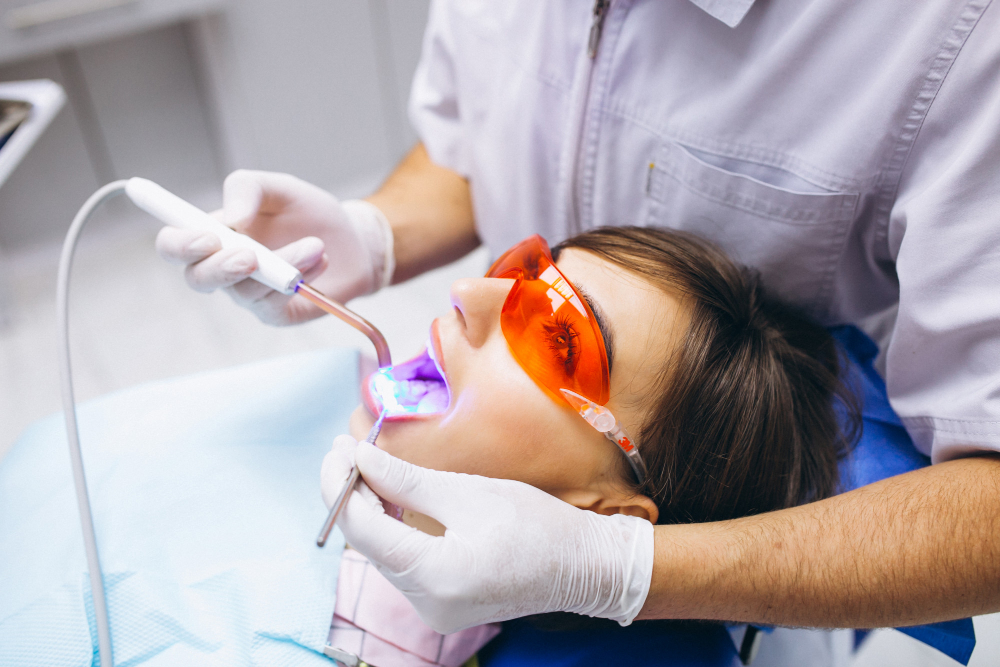
Many people wonder, how does laser dentistry work? Dentists use a special device that gives off a narrow beam of light. This light can cut or shape soft and hard tissues in the mouth. For example, the laser can remove decay from a tooth or reshape the gums. The dentist controls the laser carefully for safe and accurate treatment. Because the laser seals blood vessels, there is often less bleeding.
What to Expect During a Laser Dental Procedure
Before the procedure, your dentist will explain each step. Usually, you will not need much numbing medicine. During the treatment, you may hear clicking sounds, but there is little vibration. Most people feel only mild discomfort. After the procedure, you can often return to normal activities quickly. However, your dentist will give you care instructions to help you heal well.
Safety, Risks, and Considerations
Laser dentistry is safe when performed by a trained dentist. Still, there are some risks. For example, improper use can harm nearby tissues. That is why you should always choose a qualified dental professional. The American Dental Association recommends using protective eyewear during laser procedures. Although side effects are rare, you may feel mild soreness or swelling afterward. If you have concerns, talk to your dentist before treatment.
Who Is a Good Candidate for Laser Dentistry?
Many people can benefit from laser dental treatment. You may be a good candidate if you:
However, not all dental problems can be treated with lasers. Your dentist will check your mouth and discuss the best options for you. In some cases, traditional tools may still be needed.
Prevention and Oral Care Tips After Laser Treatment
After laser dentistry, caring for your mouth is important. To help your mouth heal, follow these tips:
Because good oral care helps prevent future problems, always follow your dentist’s advice.
Conclusion
Laser dentistry offers many benefits, such as less pain and faster healing. It is safe and effective for many dental treatments. However, only a dentist can decide if it is right for you. Consult a qualified dentist to learn if laser dentistry is right for you.